Who IR35 applies to: contractors, sole traders, limited companies and umbrella workers
IR35 catches one structure and leaves others alone. Here is exactly where you sit, and who carries the liability.

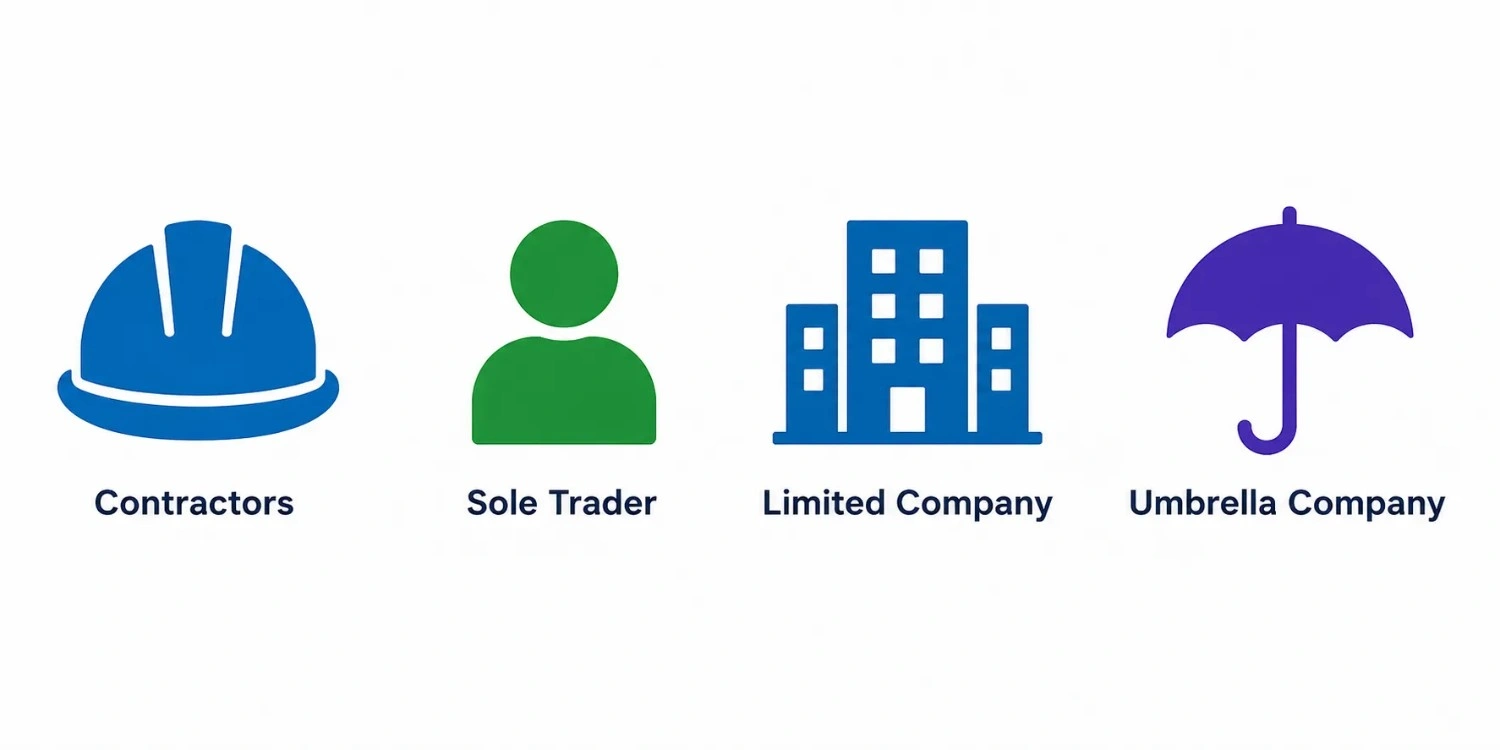
IR35 applies to one group: contractors working through a limited company or similar intermediary. Sole traders sit outside its scope entirely — no intermediary means no IR35. Umbrella workers are not a separate category either; the umbrella is just how you get paid. If your client is medium or large, they determine your status. If they are small, that job falls to you, along with the liability if you get it wrong.
This page covers each worker type clearly. It explains what IR35 means for them, who holds responsibility, and what happens in practice.
Does IR35 apply to every contractor?
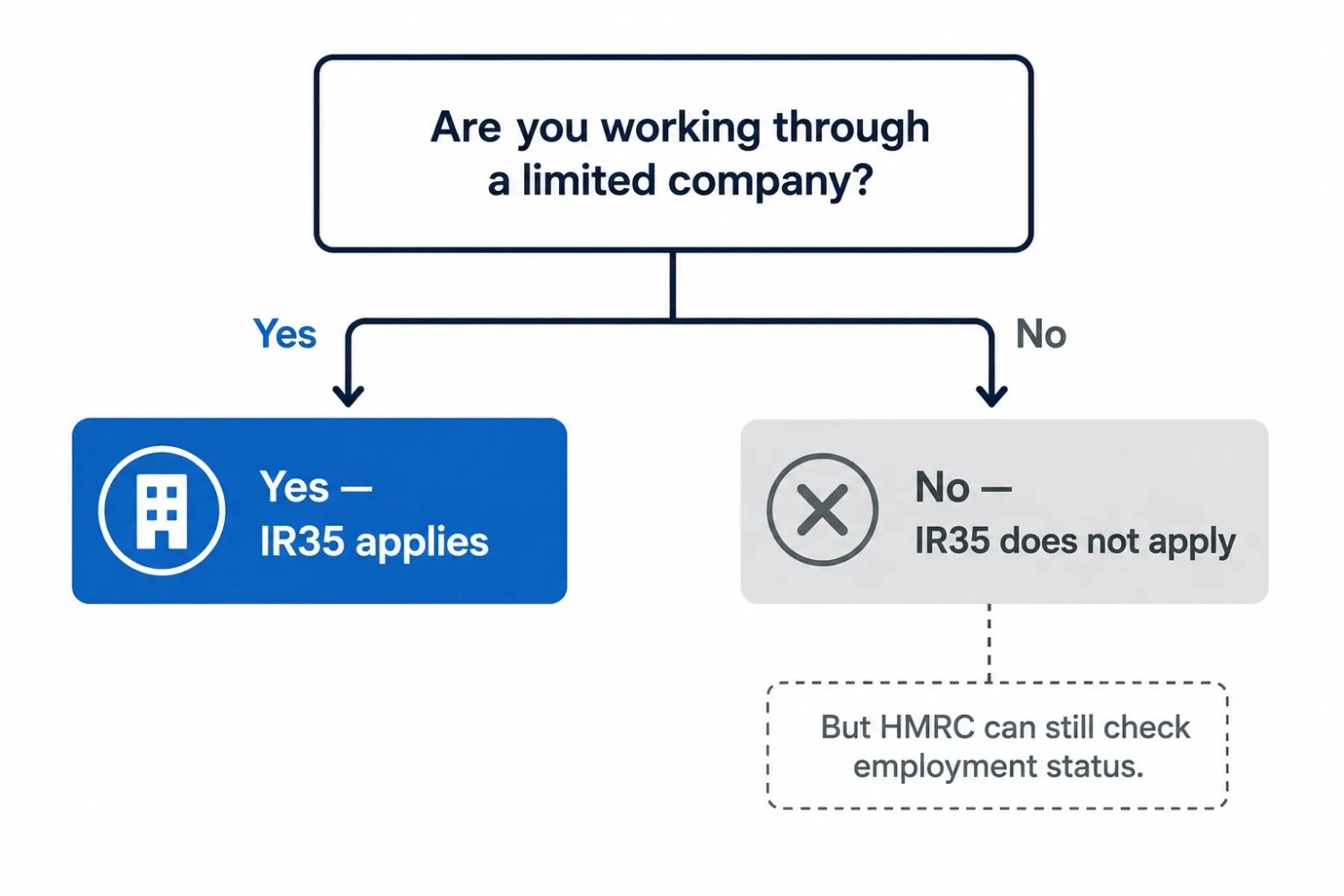
No. IR35 does not apply in the same way to every contractor. The legislation targets one specific structure: a worker who provides services through an intermediary, usually a limited company, but whose working arrangement looks like employment when you strip that structure away.
No intermediary means IR35 does not apply in the same way. If there is one, the IR35 position depends on how the working relationship is structured, not just what the contract says.
IR35 and contractors: what the rules actually say
When people talk about IR35, they usually mean contractors working through a limited company. This is also called a personal service company (PSC). You own the company. The company holds the contract. The company pays you. That structure is exactly what IR35 was built to assess.
IR35 asks one question: if you remove the limited company, does the working relationship look like employment? If yes, HMRC wants that income taxed as employment income.
Who determines IR35 status for contractors?
Since the 2021 off-payroll working reforms, who decides status depends on the end client's size.
- Medium and large businesses: the end client makes the IR35 determination and must issue a Status Determination Statement before the engagement starts.
- Small businesses: the contractor determines their own status through their limited company — and carries the liability if they get it wrong.
A client counts as small if it meets two of these three: turnover under £10.2 million, balance sheet under £5.1 million, or fewer than 50 employees. If your client qualifies, the determination is yours.
What an outside IR35 contract actually requires
A contract clause alone cannot create outside IR35 status. Three things carry the most weight:
- Right of substitution: you can send a qualified substitute, and the client will accept one. A clause added purely for show carries little weight.
- Control: you decide how the work gets done. The client tells you what they want; the how and the daily execution are up to you.
- Mutuality of obligation: neither side must continue once the contract ends. You are hired for a set piece of work, not kept on with no end date.
An inside IR35 contract tends to show the opposite: fixed hours, client-controlled methods, and long-running arrangements that look more like a permanent job than a project.
What happens when contractors ignore IR35: a real example
A post for any contractor who tells themselves they will deal with IR35 later shows exactly how this plays out.

The contractor had worked for the same company since early 2023. They used the client's project tools. They attended daily standups. They invoiced through a limited company. They never ran an IR35 check. When their accountant reviewed the self-assessment, the arrangement almost certainly fell inside IR35. The potential backdated Class 1 National Insurance came to over £12,000 — before the knock-on effects on student loan repayments and pension contributions, which they thought they had structured efficiently.
The client staying quiet is not a defence. The contractor knew the setup was not right, but the client never raised it, so they kept going. That is not how HMRC sees it. Whether the client brings up IR35 has no bearing on whether the liability exists.
The replies all pointed to the same first step: run the HMRC Check Employment Status for Tax tool honestly, then get an independent review if the contract value justifies it.
Does IR35 apply to sole traders?
This is one of the most common myths in contracting. Sole traders are not in scope for IR35.
IR35 needs an intermediary — a limited company, partnership or similar structure sitting between the worker and the client. A sole trader contracts in their own name. There is no intermediary, so there is nothing for IR35 to attach to.
What sole traders should still think about
IR35 not applying does not mean employment status is irrelevant. HMRC can still look at whether a sole trader's arrangement is disguised employment under general employment status rules. This is most common for workers on full-time, single-client arrangements over a long period.
The key difference: sole traders pay income tax and National Insurance through self-assessment. They do not pay the employer's NI, and there is no PAYE. But if HMRC decides the role should have been employment, there are still tax consequences — just under different rules than IR35.
The difference between IR35 and broader employment status is explained fully in what IR35 is and how HMRC applies the rules, which is useful for any sole trader thinking about moving to a limited company.
IR35 self-employed: what people are really asking
Searches like "IR35 self-employed" or "does IR35 affect sole traders" usually come from the same place: am I at risk? For a sole trader with several clients and no intermediary, IR35 is not the immediate issue. Employment status in general might be worth looking at, but that is a separate matter.
It becomes relevant when a self-employed person considers setting up a limited company for tax reasons. Once that company holds contracts, IR35 applies — and working practices that were fine as a sole trader may not hold up under IR35 scrutiny.
IR35 and limited companies: the core of the legislation
IR35 was written for personal service companies. If you run a limited company, use it to hold contracts, and the work looks like employment, IR35 applies to you.
Working outside IR35 through a limited company is the most tax-efficient contracting setup in the UK. You take a low salary, usually around the personal allowance. The rest comes out as dividends, which are taxed at a lower rate than employment income. Your company also pays corporation tax rather than full PAYE rates, and you can claim business expenses against profits.
Working inside IR35 through a limited company is possible, but the tax advantage goes away. Income becomes deemed employment income and runs through PAYE, usually via an umbrella company. At higher day rates, the gap between inside and outside IR35 take-home can exceed £20,000 a year at the same contract rate.
The small company exemption explained
The small company exemption is one of the most searched IR35 topics for limited company contractors. It decides who is responsible for the IR35 determination.
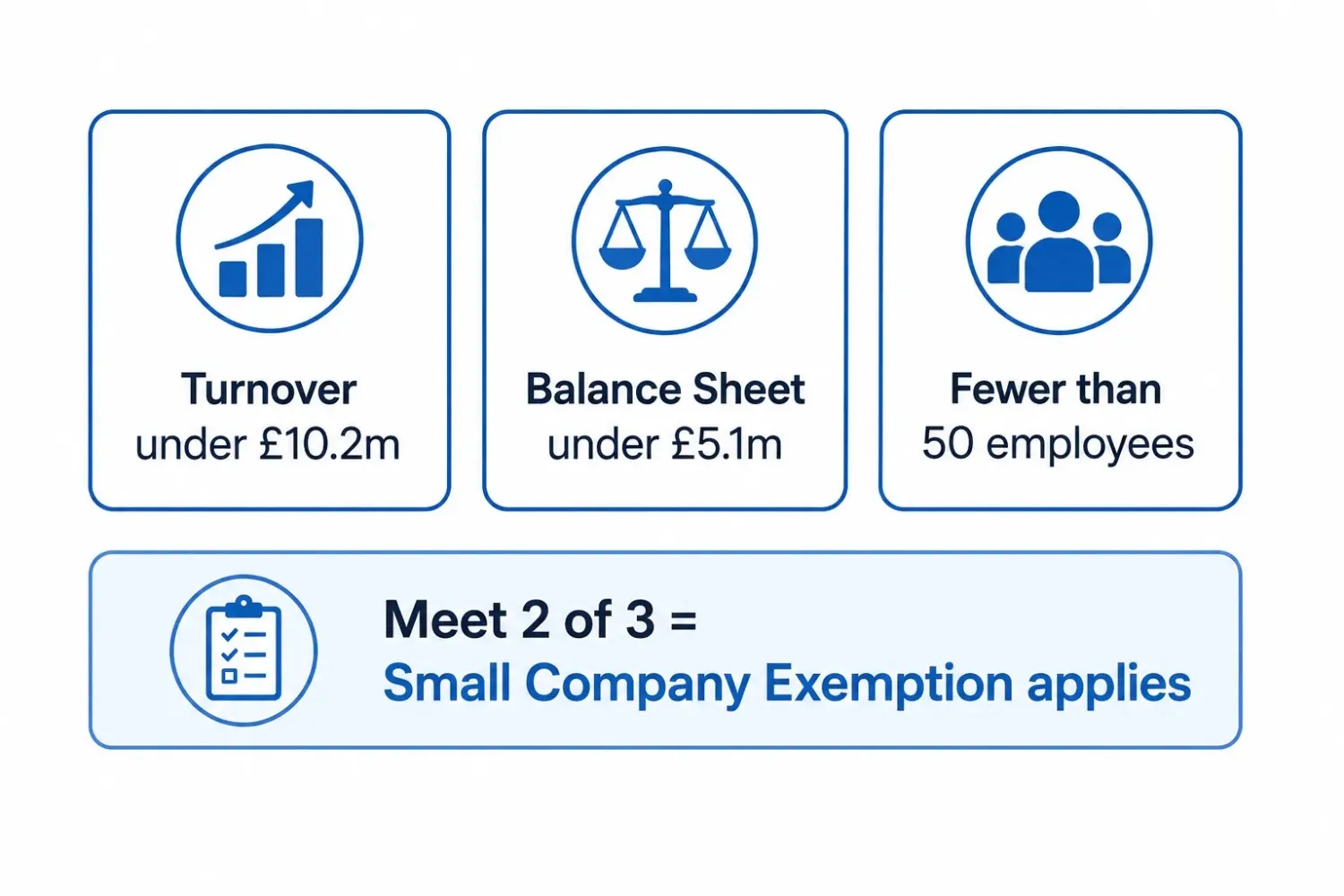
If your end client qualifies as small, the 2021 off-payroll reforms do not apply to them. You determine your own IR35 status, just as contractors did before 2021.
For medium or large clients, they run the assessment, issue the SDS, and hold the liability. Contractors can dispute an SDS and the client must respond within 45 days, but the default responsibility sits with the end client.
Whether you are self-determining or reviewing an SDS, understanding the three tests matters. Substitution, control and mutuality of obligation are all covered in the IR35 status check, including what to do when CEST cannot give a clear result.
IR35 and umbrella companies: separate things that often go together
Using an umbrella company does not automatically put you inside IR35. The two things are separate, even though they often appear together.
An umbrella company is a payroll tool. It employs you, takes your contract income from the agency or client, deducts the employer's NI, the apprenticeship levy and its fee, then pays you through PAYE. How you get paid is a different question from whether your contract is inside or outside IR35.
Most umbrella workers are inside IR35. Inside IR35 means PAYE, and an umbrella is the easiest way to handle it. But contractors outside IR35 can also use umbrellas, especially on short contracts where setting up a limited company is not worth the effort.
Outside IR35 through an umbrella: when it comes up
Contractors on higher rates — say £100 per hour on a 12-month contract — tend to find that outside IR35 through a limited company is the most tax-efficient route, provided the working practices support it. Outside IR35 through an umbrella still means the employer's NI, the apprenticeship levy and umbrella fees are all deducted, which wipes out much of the benefit the outside IR35 position would otherwise bring.
What a compliant umbrella cannot do
A legitimate umbrella cannot pay you more than the standard PAYE formula allows. HMRC sets that formula. If an umbrella promises a lot more than others at the same rate, ask why. HMRC has gone after non-compliant umbrella schemes, and contractors caught up in them have sometimes been left paying the tax bill.
IR35 by worker type: plain English summary
- Sole traders: IR35 does not apply. No intermediary means no IR35 scope. Employment status under the general rules can still be investigated.
- Limited company contractors: IR35 applies. Status depends on working arrangements, assessed by the end client (medium and large businesses) or by the contractor (where the small company exemption applies).
- Umbrella workers: the umbrella is a payroll mechanism, not an IR35 category. Status depends on the underlying contract; most umbrella workers are inside IR35.
- Self-employed on a sole trader basis: IR35 does not technically apply. Broader employment status rules may still be relevant for single-client, full-time arrangements.
Conclusion
IR35 applies to contractors working through an intermediary — in most cases a limited company. Sole traders are outside its scope, though HMRC still has other tools to investigate employment status. Umbrella companies are not a separate IR35 category; they are a payroll route, and the status question is the same regardless of how the income gets processed.
The most expensive IR35 mistakes share one thing: the contractor knew something was off but kept going. Checking your status at the start of each contract and making sure your working practices match your contract is far cheaper than fixing it during an HMRC investigation.
Frequently asked questions
No. IR35 needs an intermediary, such as a limited company. Sole traders contract in their own name, so there is no intermediary. HMRC can still look at employment status under general rules, but that is a different framework from IR35.
Yes. IR35 status is assessed contract by contract, not per person. A limited company contractor can run an outside IR35 contract with one client and an inside IR35 contract with another at the same time. Each needs its own determination.
No. One client is a factor HMRC may look at, but it does not decide status alone. What matters is the working relationship: control, substitution and mutuality of obligation. Many contractors work with one client for a long time and stay outside IR35 when the contract and working practices both support it.
It means the contractor, not the end client, determines IR35 status and holds the liability. The end client counts as small if it meets two of the following: turnover under £10.2m, balance sheet under £5.1m, fewer than 50 employees. IR35 still applies — the exemption only changes who makes the call.
Not automatically. Umbrella companies are a payroll tool, not an IR35 category. Most umbrella workers are inside IR35, but status depends on the contract and working arrangement, not on whether an umbrella is used.
Not under IR35 — there is no intermediary. But HMRC can still check whether a sole trader's arrangement is genuine self-employment under general employment status rules. This is more likely for long-term, full-time, single-client setups.
See what you would actually take home.
Enter your day rate once and compare inside and outside IR35 side by side. Free, no signup.