IR35 checker: how to check your IR35 status
A step-by-step guide to CEST, the three tests, the SDS process, and a free self-assessment checklist you can work through in five minutes.

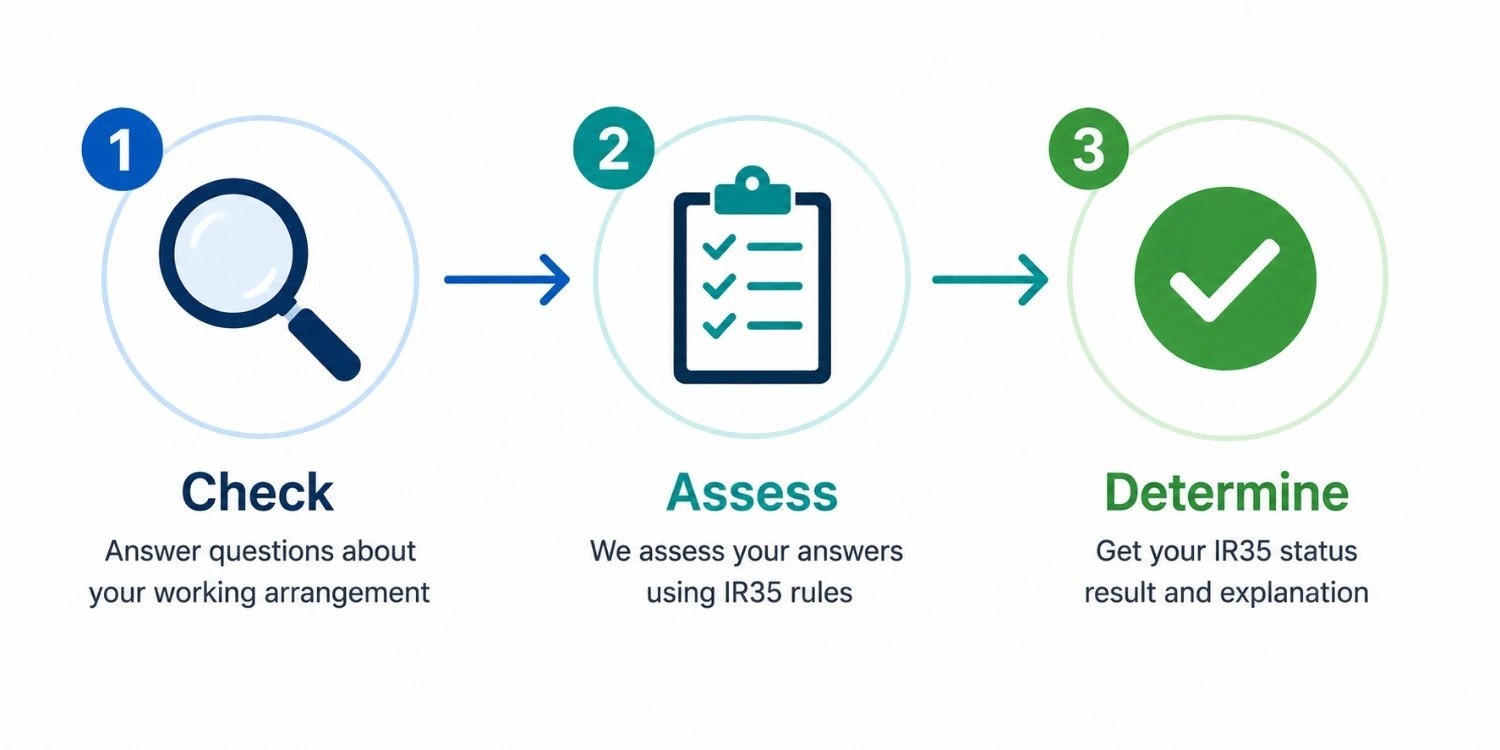
Check your IR35 status using HMRC's free CEST tool, which gives an inside, outside or "unable to determine" result in about 15 to 30 minutes. If your client is a medium or large business, they make the determination and must issue an SDS. If the result is unclear or the contract is high value, commission an independent IR35 review (£100 to £500).
Use the sections below in order, or jump straight to the part you need.
What is an IR35 check?
An IR35 check, sometimes called an IR35 assessment or IR35 determination, is the process of establishing whether a contractor's working arrangement meets the legal definition of employment for tax purposes.
The check looks at the substance of the working relationship, not just what the contract says. HMRC is interested in how the work actually happens day to day: who controls it, whether the contractor could send someone else to do it, and whether there are ongoing obligations on both sides to keep the arrangement going.
There are two ways to run an IR35 check:
- Use HMRC's free online tool, Check Employment Status for Tax (CEST), the official starting point for most assessments
- Get an independent IR35 review from a specialist, which gives a more thorough and legally defensible result
Neither route is perfect on its own, which is why understanding the underlying tests matters.
Who is responsible for the IR35 assessment?
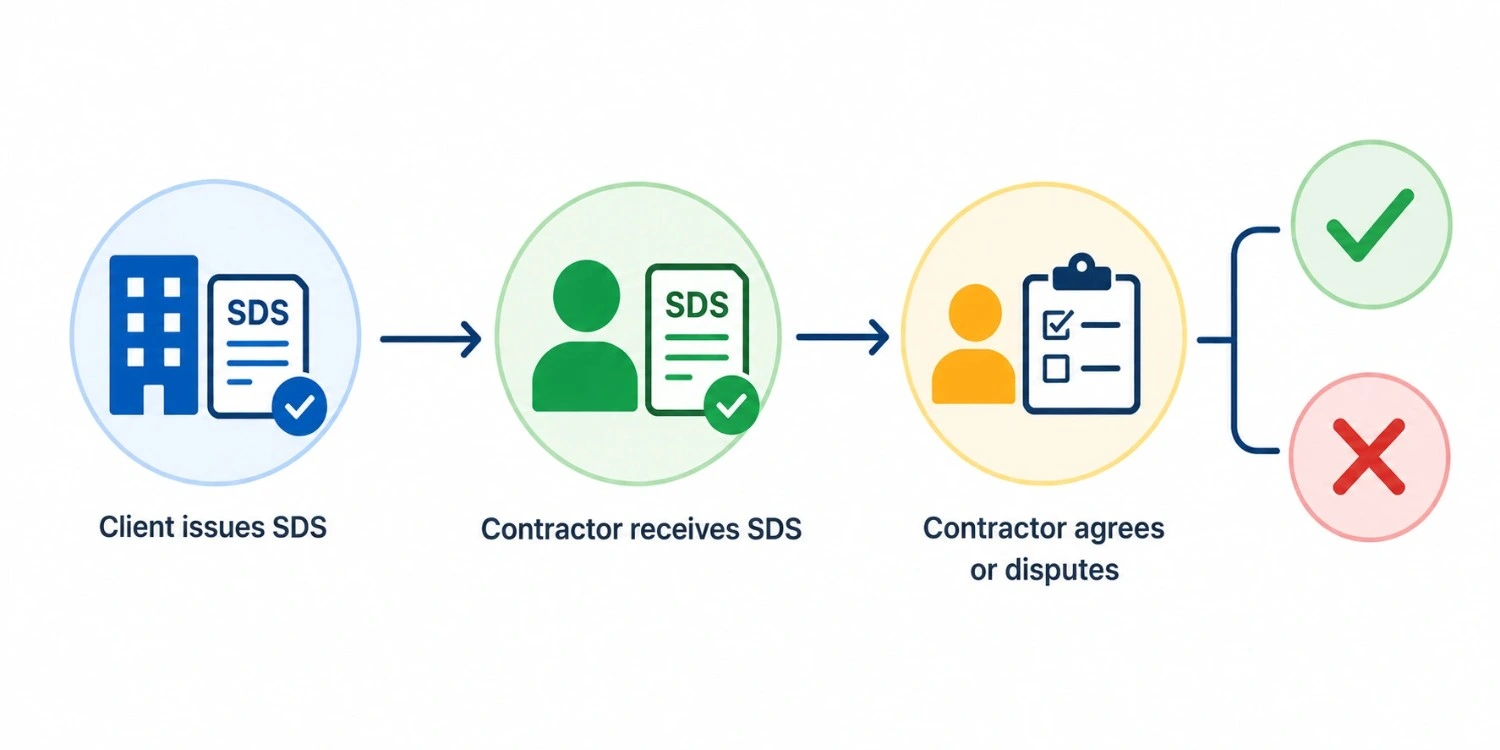
Since the off-payroll working reforms in 2021, responsibility for determining IR35 status has shifted significantly. For contracts with medium and large businesses, the end client now makes the determination, not the contractor. They must issue a Status Determination Statement (SDS) before the engagement begins.
For contracts with small businesses, the rules are different. A company qualifies as small if it meets at least two of these three conditions:
- Turnover under £10.2 million
- Balance sheet total under £5.1 million
- Fewer than 50 employees
Where the small company exemption applies, the contractor — through their limited company — is still responsible for assessing their own status. If you are working through a limited company and your client qualifies as small, the IR35 check is on you.
What is the HMRC CEST tool?
CEST stands for Check Employment Status for Tax. It is HMRC's free online tool, introduced in 2017, to help contractors, hirers and agencies work out IR35 status before a contract starts.
You answer a series of questions about the working arrangement — things like whether a substitute could step in, who controls how the work is done, and whether either side is obliged to continue the engagement. CEST processes those answers and returns one of three outcomes:
- Outside IR35 — HMRC is satisfied that the arrangement is genuinely self-employed
- Inside IR35 — the working relationship looks like employment
- Unable to determine — CEST cannot give a clear result based on the answers provided
What CEST does not cover
CEST has well-documented limitations. The most significant is that it does not assess mutuality of obligation, one of the three core IR35 tests. HMRC's position is that MOO exists in all working arrangements by default, so it does not need to be tested. Many IR35 specialists strongly disagree with this approach.
The tool also does not give a legally binding result in all situations. HMRC has said it will stand behind CEST outcomes where the information entered is accurate and the facts have not changed, but CEST results have been challenged in tribunal and have not always held up, particularly on the question of MOO.
For a straightforward contract, CEST is a useful starting point. For higher-value or more complex arrangements, an independent review gives you stronger protection. HMRC's employment status manual sets out the full legal framework that both CEST and tribunal decisions draw from.
The three IR35 tests explained
Every IR35 assessment — whether through CEST, an independent review or a tribunal — comes back to three core tests. These are not a checklist where passing two out of three is enough. They are evaluated together, with the overall picture of the working relationship taken into account.
1. Personal service and right of substitution
The first test asks whether you personally have to do the work. In a genuine self-employment arrangement, you would have the right to send a qualified substitute to carry out the contract on your behalf. The client would be contracting for a service, not for you specifically.
A real right of substitution is one of the strongest indicators of outside IR35 status. It needs to be commercially credible; a clause added purely for show, where the client would never accept a substitute in practice, carries much less weight. HMRC and tribunals look at whether substitution has actually happened or could realistically happen, not just whether the contract says it can.
2. Control
The control test looks at how, when and where you work. The more a client directs those things — setting your hours, dictating methods, requiring on-site attendance — the more the arrangement looks like employment.
Genuine outside IR35 contractors tend to have significant autonomy over how they deliver the work. They agree a deadline or a specification, but the day-to-day execution is theirs to manage. If the client is effectively managing you the same way they manage permanent staff, that is a red flag.
3. Mutuality of obligation (MOO)
Mutuality of obligation refers to the ongoing expectations on both sides: is the client obliged to keep offering you work, and are you obliged to keep accepting it? A permanent employment contract implies exactly this kind of ongoing mutual commitment.
Genuine outside IR35 contracting should be project-based. There is a contract for a defined piece of work, and once it is done neither side has an obligation to continue. Rolling renewals that effectively create an indefinite arrangement start to look less like contracting and more like employment.
As noted above, CEST does not test MOO directly, which is one reason some contractors and specialists prefer an independent review for higher-stakes engagements.
Other factors that influence status
- Financial risk: do you bear real financial risk if the work is substandard or late? Employees do not; genuine contractors do.
- Integration: how embedded are you in the client's organisation? Internal email, org chart, attending team meetings?
- Equipment: do you use your own tools and equipment, or the client's?
- Exclusivity: are you free to work for other clients simultaneously, or are you effectively tied to one?
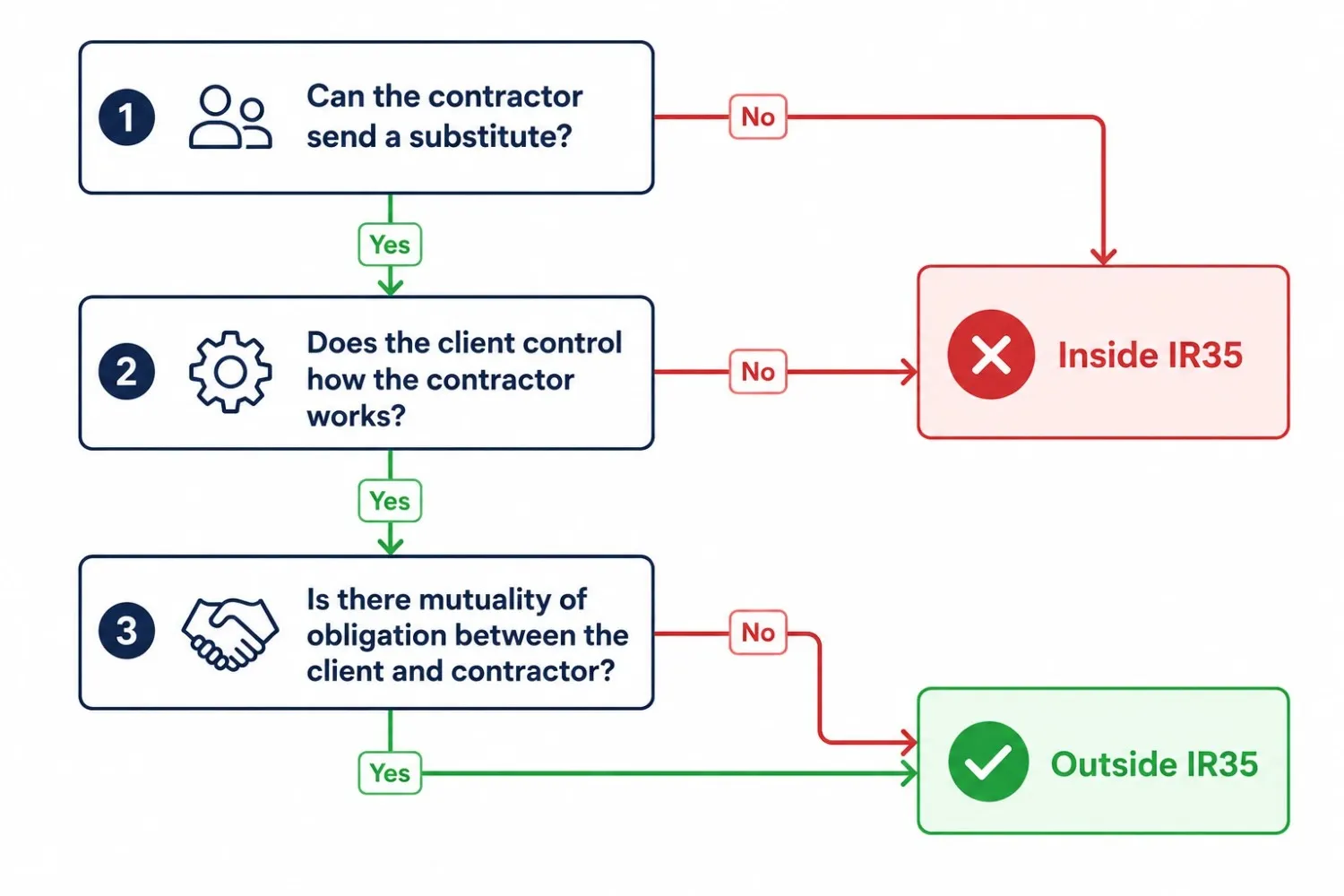
IR35 checklist: quick self-assessment
Before using CEST or commissioning an independent review, this checklist gives you a quick read on where your contract is likely to land. It is not a substitute for a formal assessment, but it is a practical starting point.
If most of your answers fall in the inside column, your contract is likely to be assessed as inside IR35. If they fall to the outside column, outside IR35 status is more defensible. A mixed result is common, which is exactly why a formal IR35 assessment adds value.
What does your IR35 determination result mean?
Outside IR35: what to do next
An outside IR35 determination means HMRC considers your working arrangement to be genuinely self-employed. You can continue operating through your limited company, paying yourself via a salary and dividend mix, and deducting legitimate business expenses.
Outside IR35 status is not a one-time decision. Each contract needs its own assessment, and your working practices need to match your contract wording throughout the engagement. If a client's ways of working change mid-contract, your IR35 status can shift with it, so revisit the assessment at each renewal.
Inside IR35: what to do next
An inside IR35 determination means your earnings for that contract will be treated as deemed employment income. Tax and National Insurance will be deducted through PAYE, either directly by the end client or, more commonly, via an umbrella company acting as your employer for payroll purposes.
Working inside IR35 does not mean you have done anything wrong. It is a reflection of how that particular working arrangement looks under the legislation. What matters is that the tax is processed correctly.
Unable to determine: what to do next
A CEST result of "unable to determine" means the tool cannot give a clear answer based on what you have entered. This happens when the answers create a genuinely ambiguous picture, or when questions about hypothetical scenarios like substitution are answered in a way the tool cannot resolve.
Do not treat ambiguity as an outside IR35 result. If you get this result, review your answers with a specialist or commission an independent IR35 review before proceeding.
What is a Status Determination Statement?
A Status Determination Statement (SDS) is the formal document an end client must issue to a contractor setting out their IR35 determination and the reasons for it. For medium and large businesses engaging contractors through personal service companies, issuing an SDS is a legal requirement before the engagement starts.
The SDS must state whether the engagement is inside or outside IR35, give the reasons for the determination, and be passed down the supply chain to the contractor.
What to do if you disagree with your SDS
You have the right to formally dispute an SDS you disagree with. The end client must have a client-led disagreement process in place and is legally required to consider any representations you make. They must respond in writing within 45 days. They do not have to change the determination, but they must engage with the challenge.
If the dispute is not resolved, your options are to accept the inside IR35 determination, decline the contract, or take independent legal advice. HMRC does not adjudicate SDS disputes directly.
What contractors actually ask about IR35 assessments
One question that comes up regularly among contractors managing both umbrella and sole trader income is how self-assessment actually works when you are operating across two different tax structures at the same time.
A contractor raised exactly this — working inside IR35 through an umbrella company while also taking on clients as a sole trader, and was unsure whether umbrella income needed to go on the self-assessment at all, since tax was already being deducted through PAYE.
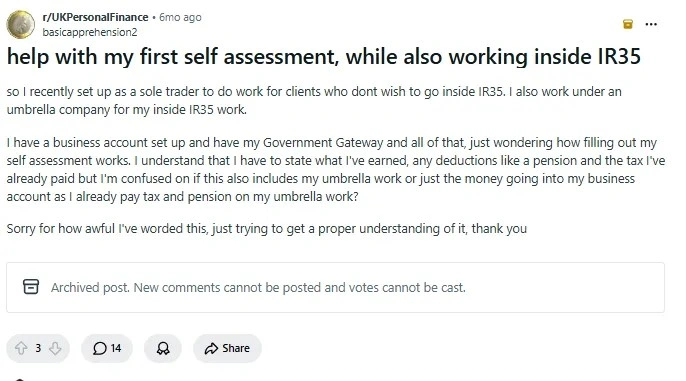
The answer, as confirmed in the thread, is that both streams need to be declared. Umbrella income processed through PAYE still appears on your self-assessment; you copy the figures across from your P60, including the tax already deducted. Your sole trader income sits alongside it as a separate entry. The two are taxed differently, but both need to be reported in the same return.
Should you get an independent IR35 review?
CEST is free and gives a fast result. An independent review from an IR35 specialist costs money but gives you something CEST cannot: a documented, legally defensible assessment based on your specific contract and actual working practices.
An independent review is worth considering when:
- The contract value is significant and the inside/outside difference is material to your finances
- CEST returns an "unable to determine" result
- Your working arrangement has genuinely borderline characteristics
- You are starting a contract with a client you previously worked for as an employee
- Your client is a small company and you are self-determining your status
Some contractors also take out IR35 insurance, which covers legal costs and any tax liability if HMRC investigates and reaches a different determination. Providers such as Qdos and Kingsbridge offer policies specifically for contractors. If your insurer has reviewed your contract as part of the policy, that review typically serves as your independent assessment too.
IR35 checks and your self-assessment
Whether your contract is inside or outside IR35 has a direct impact on how you complete your self-assessment tax return, particularly if you operate across both at the same time. Some contractors work through an umbrella company for inside IR35 engagements and through their limited company for outside ones simultaneously.
For inside IR35 income processed through an umbrella company, the PAYE deductions are handled by the umbrella. That income and the tax paid still need to be declared on your self-assessment alongside any limited company income. The two streams are taxed differently, and getting them reported correctly matters. If you are unsure how your IR35 status affects your self-assessment filing, a qualified accountant saves considerably more than they cost.
Summary: how to approach your IR35 check
Checking your IR35 status is not a one-off task. It needs to happen at the start of each new contract, whenever your working arrangements change in a meaningful way, and when you move between clients or engagement models.
The practical order of steps for most contractors:
- Work through the IR35 checklist above to get a rough sense of where your contract sits
- Run your details through HMRC's CEST tool as the official baseline
- If the contract is borderline, high value, or CEST returns "unable to determine", commission an independent review
- Make sure your contract wording and actual working practices are aligned — both need to point in the same direction
- If inside IR35, ensure PAYE is being processed correctly, usually through an umbrella company
Running the numbers before accepting a contract is straightforward with the IR35 calculator, which shows inside and outside take-home pay at your day rate side by side. If you want to go deeper on the legislation itself, what IR35 means and how the rules work covers everything from the 2000 introduction through to the 2021 off-payroll reforms.
IR35 checker FAQs
Not in all cases. HMRC has said it will stand by CEST results where the information entered is accurate and unchanged. However, CEST results have been contested in tribunals and do not always hold up, particularly on mutuality of obligation, which CEST does not assess.
A CEST check takes around 15 to 30 minutes if you have the contract details in front of you. An independent professional review typically takes a few days to a week, depending on the complexity of the arrangement.
Yes. You have the right to formally challenge an SDS through the client's dispute process. They must respond in writing within 45 days. They are not obliged to change the determination, but they must engage with the challenge.
Your contract wording is one factor, but not the only one. HMRC and tribunals look at the actual working relationship, not just what the contract says. If there is a conflict, the practical working arrangement usually carries more weight.
Yes. IR35 status is assessed engagement by engagement. You can have one outside IR35 contract running at the same time as an inside IR35 one with a different client. Each needs its own determination.
It means CEST cannot give a clear result based on the answers provided. This does not mean your contract is outside IR35. Review your answers with a specialist or commission an independent review before proceeding.
An SDS is the formal document that a medium or large end client must issue before the engagement starts. It states the IR35 determination, the reasons for it, and must be passed down to the contractor through the supply chain.
Yes. HMRC's CEST tool is free to use and is the official starting point for most IR35 assessments. An independent professional review involves a fee, typically from around £100 to £500 depending on the provider and complexity.
See what you would actually take home.
Enter your day rate once and compare inside and outside IR35 side by side. Free, no signup.